Y2k futurism aesthetic
What Is the Y2K Aesthetic?
Y2K — short for "Year 2000" — was originally the name of a tech crisis: computers stored years with two digits, so 1999 flipping to 2000 was feared to break every system on Earth.
The disaster never came. What stayed was the visual language of that anxious, electric moment: a world caught between analog nostalgia and digital acceleration.
The Y2K aesthetic captures the late 90s and early 2000s obsession with the future. Chrome surfaces, translucent plastics, metallic fabrics, pixelated fonts, and an almost naive belief that technology was simultaneously terrifying and glamorous. It was retrofuturism in real time — people designing a tomorrow that looked like a video game from today.
The Y2K revival hit hard in the 2020s, driven by Gen Z discovering the era through thrift stores, TikTok, and a collective longing for a time when the future felt exciting rather than threatening. Fashion runways, music videos, and digital art all leaned back into the glitch, the chrome, and the spacesuit.
Y2K & Music Culture
The Y2K era was the golden age of Eurodance. From Cascada to Aqua, from Vengaboys to Eiffel 65, the sonic palette was as maximalist as the visual one: punishing BPMs, synthesized vocals, four-on-the-floor kicks, and hooks so catchy they seemed engineered by a machine that had studied every chart since 1985.
Eurodance was born in the clubs of Germany and Italy in the early 90s and reached its commercial apex right at the millennium, fusing hi-NRG, techno, and pop into something that felt simultaneously cheap, euphoric, and strangely futuristic. The genre came with a look: female vocalists in vinyl bodysuits, male MCs in tracksuits and visors, dance routines that felt half workout, half spacecraft boarding.
The music video was the battleground. Laser grids, chrome sets, dancers in matching silver outfits against pure white infinity rooms — the Y2K pop video invented a visual grammar still being borrowed today. The aesthetic extended into every surface: album covers with embossed silver lettering, CD booklets with digital glitch art, stage shows with smoke machines and LED visors. The dance was inseparable from the image — synchronized choruses of bodies in space-age gear, moving to music that sounded like it was composed inside a satellite.
Meet 7dance — The Y2K Continuum
7dance is a Eurodance music project that takes the sonic DNA of the late 90s and early 2000s — the euphoric synth leads, the spoken-word MC breakdowns, the anthemic hooks — and runs it through a contemporary filter without losing what made the originals feel like transmissions from a cooler dimension. What sets 7dance apart is the deliberate split between its two creative worlds.
The music is made the old way: analog warmth, real arrangements, no AI generation in the audio chain. But the visual universe? That's a different story entirely.
VISUAL MANIFESTO
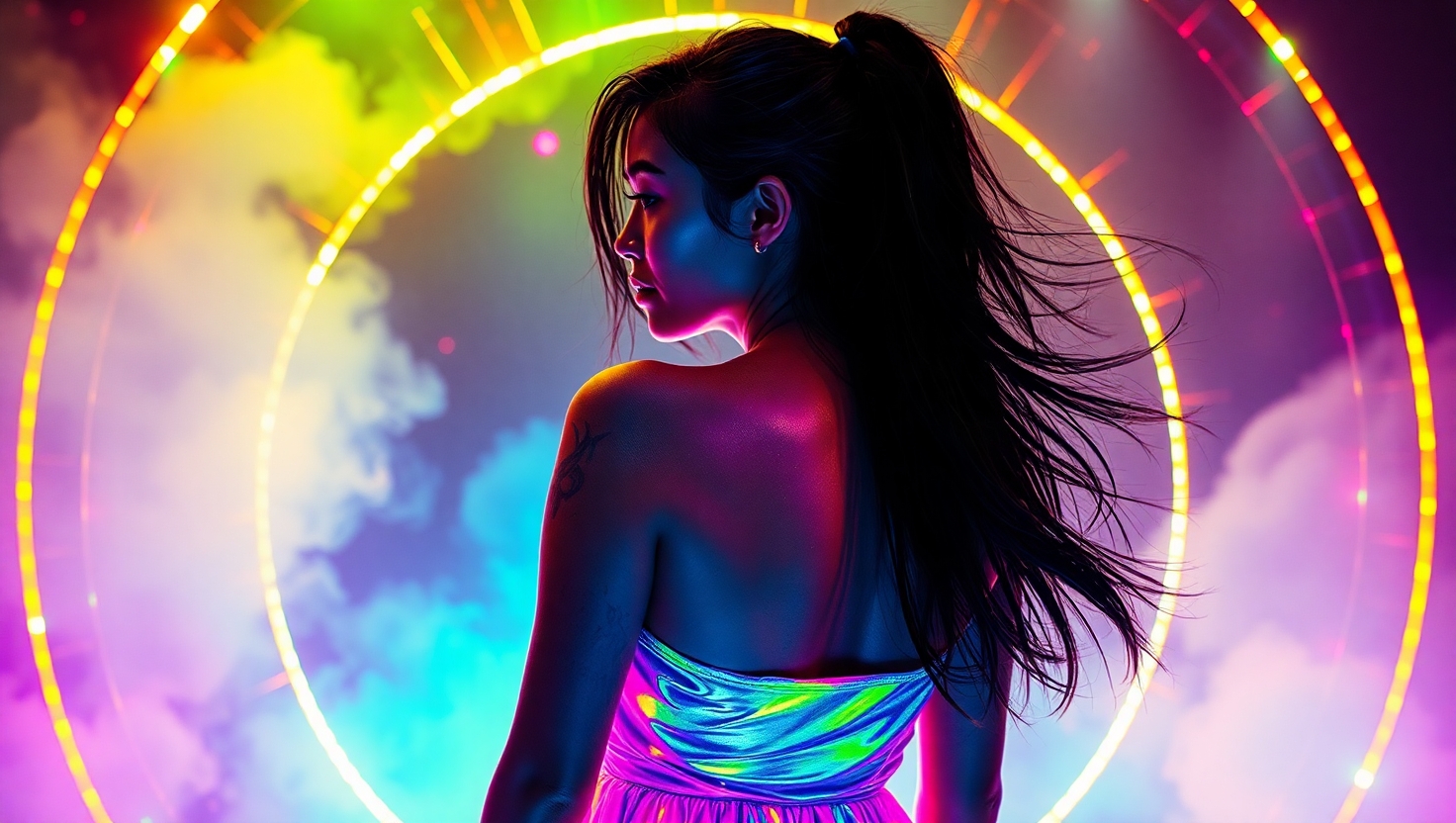
The graphics and videos of 7dance are built from AI-generated imagery that mines the visual vocabulary of Y2K futurism: chrome dancers frozen mid-move, space-age bodysuits in impossible colors, holographic backgrounds that shouldn't exist, and a sarcastic, self-aware edge that winks at the absurdity of it all. The result is retro-future nostalgia pushed through a contemporary ironic lens.
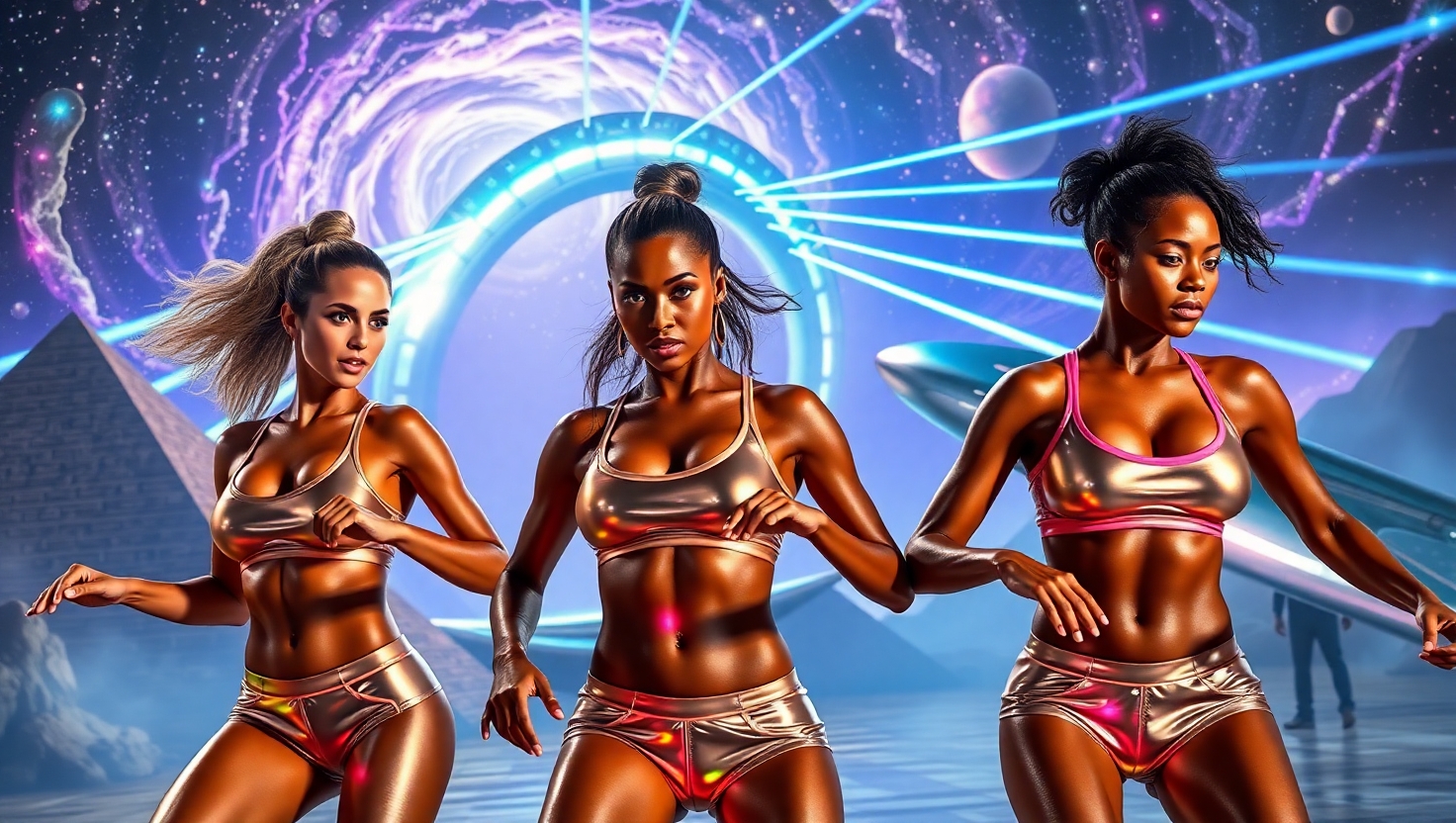
Think dancers in iridescent catsuits floating against deep-space backdrops. Liquid chrome bodies mid-leap. Pastel robots doing hand-dances in front of Y2K computer interfaces. The visual tone is simultaneously sincere and sarcastic — it loves the era it's referencing too much to just parody it, but it's too self-aware to play it completely straight.
The aesthetic touchpoints are precise: color palettes of electric cyan, hot pink, and acid lime on near-black backgrounds. Glowing grid floors. Bodies that look like they've been CGI-enhanced by a 1999 Hollywood budget. Fashion that merges Y2K club wear with what a 1990s sci-fi director imagined people would wear in 2050.
Y2K · Eurodance · 7dance — FAQ
What exactly is Y2K futurism aesthetic, and why is it so popular now?
Y2K futurism aesthetic refers to the visual and cultural style that dominated the late 1990s and early 2000s, defined by chrome surfaces, translucent plastics, iridescent fabrics, holographic textures, and a general obsession with what technology-driven future was going to look like. It's roaring back because Gen Z discovered the era secondhand — through thrift stores, streaming archives, and social media — and found a version of optimism about the future that feels almost alien compared to today.
The Y2K aesthetic says: the future is shiny, a little ridiculous, and worth dancing toward. In an era of climate anxiety and digital burnout, that's genuinely compelling.
What were the defining visual codes of Y2K fashion and design?
The Y2K visual language was a collision of optimism and anxiety about technology.
Key codes include: metallics (chrome, silver, platinum on everything), iridescent and holographic materials, low-rise silhouettes with futuristic detailing, transparent/translucent elements (bags, bodysuits, platforms), space-age outerwear and tracksuits, pixel-style typography, CG-rendered imagery that now looks retro, and color palettes that swung between clinical white-and-silver and hyper-saturated neon.
In music videos specifically, the Y2K aesthetic manifested as chrome-draped sets, laser grids, dancers in matching metallic costumes, and visual effects that were genuinely state-of-the-art in 1999.
What is Eurodance, and what made it the soundtrack of the Y2K era?
Eurodance is an electronic dance music genre that emerged in Europe in the late 1980s and reached mainstream dominance in the 1990s. It's built on four-on-the-floor kick drums, synthesizer-driven melodies, anthemic pop hooks usually sung by a female vocalist, and spoken-word or rap sections delivered by a male MC.
The formula sounds simple, but at its peak it produced some of the most irresistible music ever made. It became the Y2K era's default soundtrack because it mirrored the era's own logic: maximalist, high-energy, unashamed, and built for a dancefloor. Artists like Eiffel 65, Aqua, Vengaboys, and Cascada defined the genre, and their imagery locked in the chrome-and-spacesuit visual grammar that still defines the Y2K aesthetic.
How does 7dance connect to Y2K culture — and what makes it different from other Eurodance acts?
7dance is a Eurodance music project that draws directly from the Y2K era's sonic blueprint — the synthesizer stabs, the danceable tempos, the unabashedly feel-good energy — while existing in the present day with a clear creative philosophy. The key distinction is the intentional split between audio and visual: the music is created without AI, preserving the human craft and analog warmth of the genre's original masters.
The visuals, by contrast, are built using AI image generation to recreate and reimagine Y2K futurist imagery — chrome dancers, space-age bodysuits, holographic environments — with a contemporary, slightly sarcastic sensibility. 7dance doesn't just revive the era; it comments on it while loving it.
What does the Y2K aesthetic look like in the age of AI-generated imagery?
AI image generation is, paradoxically, the perfect tool for recreating Y2K futurism. The aesthetic was already about imagining a technological future — chrome, CG, impossible materials, synthetic perfection. AI can generate images of dancers in iridescent bodysuits against deep-space backdrops, holographic female figures mid-leap, liquid chrome bodies in motion, and Y2K computer interfaces glowing behind retro-future silhouettes — all with a fidelity and dream-logic quality that manual design struggles to match.
Projects like 7dance use this deliberately: the AI imagery amplifies the nostalgia, adds a layer of irony (because the future is generating images of imagined futures), and creates a visual world that is simultaneously authentic to the era and impossible within it.